
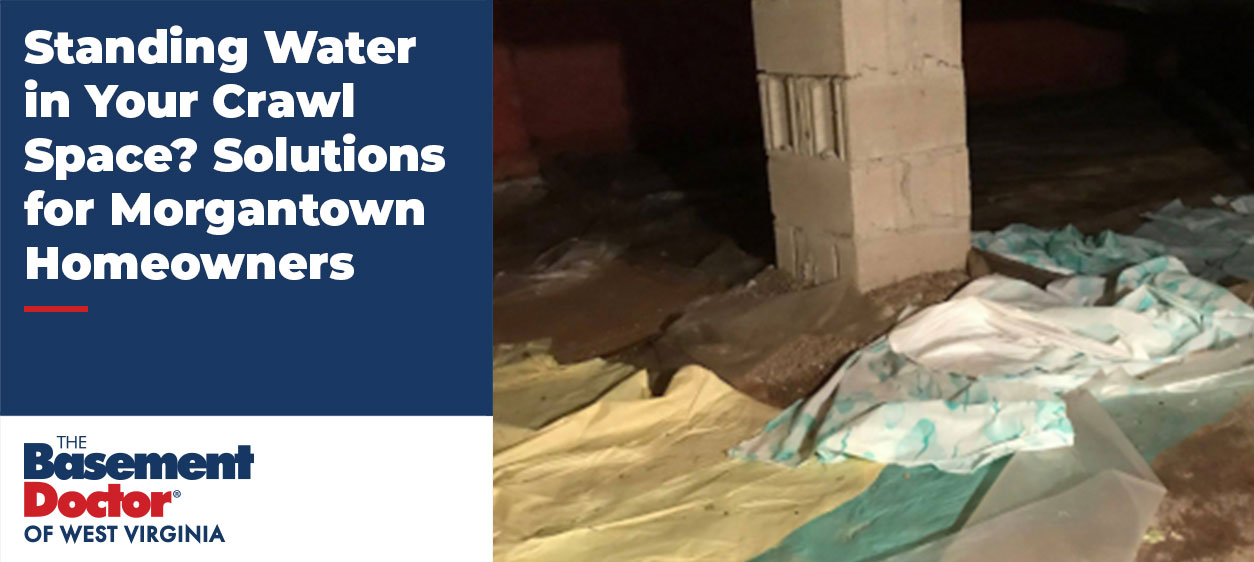
Standing water in your crawl space is more than an inconvenience. Left unaddressed, it threatens your home’s structural integrity, ruins indoor air quality, and contaminates up to 50% of the air your family breathes. Morgantown homeowners face a unique challenge: heavy seasonal rainfall and Monongalia County’s clay-rich soils create conditions where wet crawl spaces are common and damage compounds quickly.
The Basement Doctor of West Virginia has worked with local homeowners for over 30 years. Our Morgantown crawl space repair specialists know these soils and structural designs. We deliver permanent solutions that eliminate standing water, protect your foundation, and restore a healthier living environment—starting with a The Basement Doctor of West Virginia inspection completely free of charge.
Why Morgantown Homes Get Standing Water in Crawl Spaces
Clay-Rich Soils in Monongalia County
Monongalia County sits largely on Monongahela Silt Loam, which transitions to heavy clay loam about 12 inches below the surface. Around 20 inches down, a dense “fragipan” subsoil layer forms, stopping water movement almost entirely and pushing groundwater directly into local crawl spaces.
⛰️ The Morgantown Clay Trap
Because our regional soil transitions into a dense clay loam with an impenetrable fragipan layer just 20 inches below the surface, it acts like an underground sponge. Instead of allowing stormwater to naturally filter downward, the earth locks water against shallow crawl space foundations, forcing it through porous block walls or up through exposed dirt floors.
Expansive clay damages one in four home foundations nationwide—causing more structural loss annually than earthquakes, landslides, and sinkholes combined. For Morgantown homeowners, it is a constant environmental pressure.
Hillside Runoff and Sloped Terrain
Morgantown’s rolling terrain means storms bring runoff from uphill lots directly against lower foundation perimeters. A yard sloped toward a house channels water straight into the crawl space. Poor grading keeps the surrounding soil saturated throughout wet seasons when the ground never fully dries.
High Groundwater Table and Seasonal Flooding
Crawl space floors sit below the surrounding soil grade, meaning rising groundwater seeps upward through dirt floors. According to HUD, crawl spaces flood whenever the water table rises above the interior floor level. Without a perimeter drainage system or sump pump, water becomes trapped, and the structure above pays the price.
The Damage Standing Water Causes to Your Home
Sagging Floors Over Crawl Space
Wooden floor joists and support beams absorb moisture rapidly from a wet crawl space. Wood rot weakens these load-bearing members, causing them to lose structural capacity within 1 to 6 months of sustained exposure. As a result, you will notice sagging floors over crawl space areas, sloped surfaces, and sticking doors.
Mold Growth and Indoor Air Quality Problems
Mold colonizes damp surfaces within 24 to 48 hours, releasing spores that travel upward into your living areas via the stack effect. Research shows that 25% to 50% of the air you breathe on your first floor previously circulated through your crawl space. Symptoms include nasal stuffiness, chronic coughing, and aggravated asthma.
Foundation Cracks and Structural Shifting
Saturated soil expands, pushing against foundation walls. This hydrostatic pressure creates cracks that can allow water through at a rate of 5 gallons per minute through a single 1/4-inch opening, causing walls to bow inward.
The Crawl Space Moisture Progression Risk Scale
| Stage of Intrusion | Visual Warning Sign | Underlying Threat Level | Immediate Repair Protocol |
| Stage 1: High Humidity | Condensation on insulation; damp concrete. | Moderate: Promotes early mold spore colonization. | Professional dehumidification and air sealing. |
| Stage 2: Soil Saturation | Muddy floor; damp earth smells. | High: Destroys insulation; rusts metal brackets. | WhiteCap vapor barrier encapsulation. |
| Stage 3: Standing Pools | Visible pooling water; sinking piers. | Critical: Active wood rot; foundation settlement. | Perimeter drainage & sump pump installation. |
How to Get Water Out of Crawl Space: Permanent Solutions
Our team uses a proven, multi-step framework that stands out among standing water in crawl space solutions by removing water and preventing its return.
1. Water Extraction and Drying the Space
Before installing permanent hardware, existing water must come out. When learning how to get water out of crawl space zones, small puddles respond well to wet/dry vacuums, while larger accumulations require commercial water pumps. Afterward, heavy-duty dehumidifiers dry out the porous concrete surfaces.
2. Perimeter Drainage System Installation
A professional perimeter drainage system WV installation utilizes an engineered trench along interior crawl space walls. We place corrugated drain pipe and fill the trench with lava rock to keep the system clear of mud, directing excess water into a basin positioned at the lowest point.
3. Crawl Space Sump Pump Installation
Water flows to the basin through perimeter drains, automatically triggering the pump. A professional crawl space sump pump installation routes water via discharge pipes 10 to 20 feet away from your foundation. Battery backups keep systems running during severe storm power outages.
4. WhiteCap Vapor Barrier System Encapsulation
The WhiteCap vapor barrier system uses heavy-duty 12-mil to 20-mil woven reinforced construction that blocks ground moisture from evaporating into the space. Paired with a commercial-grade dehumidifier, the system permanently controls humidity and keeps the wood moisture content below 19% to eliminate structural wood rot.
Why DIY Methods Fail and When to Call Experts
Store-bought plastic sheeting and consumer dehumidifiers address symptoms—not the source. Morgantown’s clay soils, hillside runoff, and rising groundwater create moisture pressures that temporary fixes cannot hold back. DIY attempts also carry risks, putting you in direct contact with toxic mold and structurally compromised wood in a confined space.
We proudly provide permanent, certified wet crawl space repair in Morgantown and surrounding Monongalia County communities—delivering engineered solutions to families in Westover, Cheat Lake, and Star City.
If you are dealing with standing water, musty odors, or sagging floors, don’t wait for the damage to grow. Call The Basement Doctor of West Virginia today. We start with a FREE detailed inspection to give you an honest assessment and dependable solutions.