
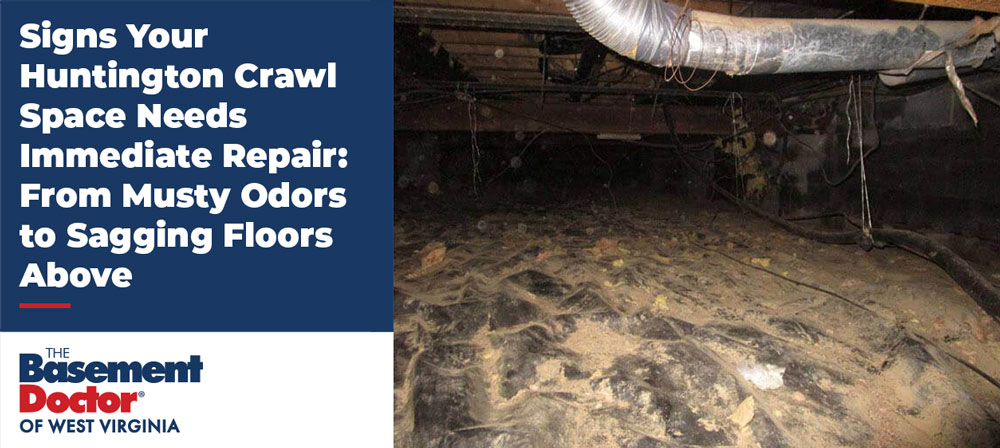
Dealing with musty odors or sagging floors in your Huntington home? Your crawl space is sending you clear warnings that minor problems need attention before they become expensive repairs. Up to 50% of your indoor air comes from below your home, and mold can start growing in just 24 to 48 hours when humidity rises. These warning signs won’t fix themselves.
Basement Doctor of West Virginia has helped Huntington area homeowners protect their biggest investment for decades. We understand West Virginia crawl spaces because we’ve seen every problem they can develop. Your home deserves better than temporary fixes.
This guide covers 10 critical warning signs that signal it’s time for professional crawl space repair in Huntington, WV. Recognizing these problems early protects your family’s health and saves you money.
Persistent Musty Odors in Your Home
Noticed that earthy, damp smell drifting through your Huntington home? That odor isn’t just unpleasant – it’s telling you about serious problems developing beneath your floors.
Crawl spaces create perfect conditions for moisture problems. When water meets wood, insulation, or soil below your home, mold and bacteria start growing and releasing gases called microbial volatile organic compounds (MVOCs). These compounds create that distinctive musty smell you’re experiencing upstairs.
What Causes the Smell
Several pathways allow moisture to build up beneath your home. Unsealed vents let humid air flow freely into the space, where it settles on cool surfaces and forms condensation. Groundwater seeps upward through dirt or clay floors, releasing several gallons of moisture vapor daily. Foundation cracks and openings permit rainwater to pool inside, while plumbing leaks introduce water directly into the area.
Traditional vented crawl spaces actually make the problem worse. Warm outdoor air enters through vents and contacts cooler surfaces, creating moisture that feeds mold growth. Mold thrives when humidity exceeds 60%. During winter months, mold goes dormant but continues releasing spores into the air. Once humidity rises again, those spores reactivate and the cycle starts over.
Health Risks Associated
According to the EPA, up to 40% of the air on your first floor originates from the crawl space. Other studies show this figure reaches 50%. This stack effect pulls contaminated air upward through gaps around pipes, wires, and floor joints.
Breathing these airborne contaminants creates multiple health problems:
- Allergy symptoms including sneezing, coughing, sinus congestion, and itchy eyes
- Asthma attacks and breathing difficulty
- Fatigue and persistent headaches
- Chronic sinus infections from prolonged exposure
- Poor air quality affecting daily comfort
Children, elderly residents, and those with compromised immune systems face the highest risks. The World Health Organization has linked mold exposure to childhood asthma cases.
How to Identify the Source
Check if the smell gets stronger after rain or when your HVAC system runs. This pattern points to moisture issues in your crawl space. Look beneath your home for visible problems: standing water, damp insulation, mold on floor joists, or wet fiberglass that appears darkened and sagging.
Watch for signs upstairs too. Condensation on windows, increased allergy symptoms among family members, or odors near floor vents all indicate crawl space problems. If you’ve noticed the smell but can’t find its source after basic inspection, professional assessment is necessary.
Contact Basement Doctor of West Virginia for crawl space repair in Huntington, WV. Our experts identify the root cause and provide lasting solutions.
Sagging or Uneven Floors
Walking across your living room shouldn’t feel like crossing a ship’s deck. Floors that bounce, dip, or feel uneven underfoot signal structural problems developing beneath your Huntington home.
What Causes Floor Sagging
Moisture damage leads the list of floor sagging problems. Wooden joists and beams lose strength when moisture content exceeds 19%, causing supports to weaken and bow under weight.. We see this constantly in unsealed crawl spaces where humidity attacks the wooden framework supporting your floors.
Clay soil movement beneath your foundation creates another serious issue. This soil expands when wet and contracts during dry periods, shifting the support under your home. Voids form beneath your foundation as soil moves, allowing sections to sink.
Support column problems plague older homes. Columns spaced too far apart overload beams, causing them to sag between supports. Columns themselves settle into weak soil, creating gaps that leave beams without proper support.
Foundation settlement pulls entire floor structures downward. Wood rot accelerates this damage when moisture reaches floor joists through unsealed crawl spaces. Termites tunnel through structural wood seeking cellulose, creating honeycomb patterns that destroy load-bearing capacity. Powderpost beetles make the problem worse by laying eggs in wooden beams, producing larvae that consume wood from the inside.
Structural Risks Involved
Sagging floors get worse over time. What starts as a small dip becomes major structural failure when moisture, rot, or pests keep working. Weakened beams and joists lead to wall separation and potential floor collapse.
Your family faces real safety risks. Uneven surfaces create tripping hazards, especially dangerous for children and elderly family members. Property values drop when potential buyers see sagging floors.
How to Identify the Problem
Trust what your feet tell you. Solid floors feel firm underfoot. Springy areas, bouncing sensations, or unusual creaking sounds mean you need professional inspection. Watch for floors sloping toward the center or sagging like a hammock.
Look for gaps widening between baseboards and floors as settling occurs. Small gaps are normal, but expanding spaces in certain areas signal structural movement. Check for soft spots or noticeable dips when walking through rooms.
Noticed these warning signs in your Huntington home? Contact Basement Doctor of West Virginia for professional crawl space repair assessment.
Visible Mold Growth and Moisture
Dark patches spreading across wooden beams represent serious structural threats to your Huntington home. Mold growth in crawl spaces creates health hazards and weakens the framework supporting your family.
What Causes Mold in Crawl Spaces
Mold needs three conditions to survive: organic material like wood, moisture or water, and humid air exceeding 55%. Crawl spaces naturally provide all three.
Bare soil floors release water vapor constantly through capillary action, keeping humidity levels elevated throughout the year. Groundwater seepage through foundation walls and cracks adds moisture that evaporates and saturates the air. This moisture makes walls, beams, and insulation absorb water over time.
Warm humid air enters through foundation vents and hits cooler surfaces like ductwork and floor joists, creating condensation. Summer months intensify this problem in humid climates. Poor ventilation traps damp air inside, allowing moisture to build up on surfaces.
Plumbing failures dump water directly into the space. Leaky drain pipes, broken water lines, and failed toilet seals create puddles that boost moisture levels and feed mold growth. Poor drainage around foundations lets rainwater pool near the house and seep into crawl spaces.
Flooding accelerates mold risk dramatically. Heavy storms saturate structural materials like wood joists and insulation. Mold spores start growing and spreading within 24 to 48 hours if these materials stay wet.
Health Risks Associated
Your HVAC system can pull mold spores from the crawl space into living areas. Research shows 19% of homes experience this contamination through ductwork. Families with children face particular concerns given the time spent indoors.
Mold spores trigger allergic reactions in sensitive people. Symptoms include nasal congestion, eye irritation, wheezing, coughing, throat irritation, skin rashes, and headaches. Asthma sufferers experience worse attacks when exposed to mold allergens. People with weak immune systems face additional risks from ongoing exposure.
How to Identify Mold Issues
Crawl space mold appears in round, speckled patterns rather than solid black patches. Growth spreads outward in three-dimensional patterns as it worsens. Colors range from black, green, white, brown, or yellow depending on the mold species.
Test floor joists and beams with a moisture meter. Readings above 20% moisture content signal conditions that need investigation. Check whether moisture stays in limited areas or spreads throughout the subfloor. A hygrometer reading above 60% relative humidity indicates excess moisture that promotes mold growth.
Contact Basement Doctor of West Virginia for crawl space repair in Huntington, WV when you find visible mold growth.
Standing Water or Water Pooling
Standing water beneath your Huntington home means your crawl space repair can’t wait. Water pooling in crawl spaces signals immediate drainage or structural failures that need professional attention.
What Causes Water Accumulation
Poor drainage around your foundation creates the biggest water entry problem. Rainwater needs to flow away from your home, but many Huntington properties have soil sloping toward the foundation. Your yard needs a minimum slope of 6 inches away from the foundation over the first 10 feet. When grading fails, rainwater pools around your foundation and seeps directly into the crawl space.
Gutter problems dump thousands of gallons beside your home. Overflowing gutters or downspouts too close to the foundation create water intrusion. Downspouts should extend at least 5 to 10 feet from your foundation. Clogged gutters spill rainwater over edges, creating excess moisture that penetrates your crawl space.
Foundation cracks provide direct water entry. Even small gaps in concrete or masonry allow groundwater and rain inside during storms. These cracks expand during freeze-thaw cycles, worsening over time. Groundwater rises after heavy rainfall when saturated soil pushes water through porous foundation walls. Areas with high water tables or poor soil drainage face increased problems.
Winter conditions worsen water accumulation. Frozen soil becomes impermeable, preventing rainwater absorption. Runoff accumulates around foundations and seeps into crawl spaces. Plumbing leaks add water directly to the space. Water pipes running through your crawl space develop leaks that steadily increase moisture. Small drips create significant humidity over time.
Structural Risks Involved
Water attacks wooden crawl space structures immediately. Floor joists, support beams, and subfloors absorb moisture, causing wood rot that weakens critical components. Wet insulation loses up to 40% of its R-value. Your heating and cooling systems run longer, increasing energy bills by 10 to 20%.
Wet soil expands and contracts around your foundation, creating pressure against foundation walls and potentially causing cracks or shifting. Standing water creates ideal conditions for mold growth, with spores spreading into living areas through the stack effect.
How to Identify Water Problems
Check your crawl space after heavy rains for visible standing water or puddles. Look for damp spots on the crawl space floor, water stains on foundation walls, and rusty metal supports or fixtures. Water accumulating seasonally indicates groundwater problems. Puddles persisting regardless of weather suggest plumbing leaks, especially if water appears below fixtures or pipes.
Contact Basement Doctor of West Virginia for professional crawl space repair in Huntington, WV when you discover standing water.
Foundation Cracks
Cracks zigzagging across your foundation walls tell a story about your home’s structural health. While water entry through cracks creates immediate problems, the cracks themselves reveal whether you’re dealing with minor settling or serious structural failure.
What Causes Foundation Cracks
Three primary conditions create foundation cracks in Huntington homes. Normal concrete curing produces shrinkage cracks as the material dries and contracts. These minor fissures measure less than 1/16 inch wide and pose no structural threat. Foundation settlement creates more serious problems. Loose backfill, soil erosion, and deterioration beneath your home cause uneven settling that produces growing cracks.
Soil expansion generates the third common cause. Clay-rich soil absorbs water during wet periods and expands, exerting pressure against foundation walls. This pressure forces walls to bow inward and crack. During dry periods, the same soil contracts and pulls away, creating additional stress.
Water damage, tree roots near the foundation, and inadequate soil compaction during construction all contribute to crack formation. Poor drainage allows water to pool near your foundation, while improperly compacted soil cannot properly support your home’s weight. Tree roots absorb moisture from soil and exert pressure as they grow, both actions destabilizing your foundation over time.
Structural Risks Involved
Foundation cracks never repair themselves. They expand gradually, so slowly you may not notice the progression. As cracks widen and lengthen, they compromise your home’s structural integrity and become increasingly expensive to repair. Small cracks in crawl spaces widen from moisture and pressure over time. Unresolved cracks eventually lead to bowing or leaning walls, signaling compromised stability requiring immediate attention.
Related damage appears throughout your home. Sticking doors and windows, uneven floors, wall separations, and drywall cracks often stem from foundation movement. Water seeps through cracks, creating dampness and mold growth that causes additional structural deterioration.
How to Identify Serious Cracks
Width serves as the primary severity indicator. Cracks wider than 1/8 inch signal potential foundation problems. Those exceeding 1/4 inch typically require professional repair. Horizontal cracks indicate bowing walls or external pressure, representing more serious concerns than vertical cracks. Stair-step patterns in brick or masonry walls suggest settlement issues.
Monitor cracks displaying these warning characteristics: moisture or odors seeping through, significant growth over time, or multiple vertical cracks appearing near each other. Contact Basement Doctor of West Virginia for crawl space repair in Huntington, WV when you spot these indicators.
Pest Infestations in Your Crawl Space
Your crawl space shouldn’t become a wildlife refuge. These dark, protected areas beneath Huntington homes naturally attract rodents, termites, carpenter ants, cockroaches, spiders, and various insects seeking ideal living conditions.
What Attracts Pests
Moisture tops the list of pest attractants. Termites, cockroaches, and carpenter ants require damp environments to survive. Termites need humid conditions because workers dry out when exposed too long. They target homes with moisture problems, creating mud tunnels to reach wood inside. Carpenter ants seek rotting wood softened by moisture for easier tunneling when establishing nests.
Entry points make invasion simple. Many pests require only openings as small as a quarter to squeeze inside. Wall vents provide easy access, while foundation cracks and gaps work equally well. Once inside, rodents and other animals find shelter from predators and harsh weather. The darkness appeals to mice and rats, which build nests in secluded spaces.
Food sources seal the deal. Rodents detect food remnants or trash stored near crawl spaces. Cockroaches feed on insects, fungi, and organic debris that accumulates in damp areas. Standing water provides drinking sources for all pests.
Health Risks Associated
Pest infestations threaten your family’s health. Rodents transmit diseases including hantavirus and leptospirosis through droppings and urine. Cockroach droppings trigger asthma attacks and allergic reactions, particularly affecting children. Pest allergens cause sneezing, coughing, itching, and respiratory infections including bronchitis and pneumonia. Ticks and mosquitoes harboring in crawl spaces can transmit Lyme disease and West Nile virus.
How to Identify Pest Activity
Listen for scratching, scurrying, or thumping sounds at night. Rats and mice produce squeaking, while raccoons and opossums create louder disturbances. Check for droppings near vents and openings. Rodent droppings appear small and pellet-shaped, whereas raccoon droppings are larger. Foul odors from animal waste or decomposing carcasses indicate active infestations. Look for torn insulation, chewed wires, gnawed wood, and shredded nesting materials.
We’ve helped Huntington area homeowners eliminate pest problems for decades. Contact Basement Doctor of West Virginia when you spot these warning signs.
High Indoor Humidity Levels
Worried about the air quality in your Huntington home? Humidity meters reveal an invisible threat lurking beneath your floors. Nearly 50% of the air you breathe upstairs originates from your crawl space. When humidity levels below exceed safe thresholds, contaminated air rises directly into your living areas through the stack effect.
What Causes Excessive Humidity
Traditional crawl space vents create problems instead of solving them. Warm, moist outdoor air enters through these openings and contacts cooler surfaces inside, creating moisture pockets that force your HVAC system to work harder. Ground moisture rises constantly from dirt floors, releasing vapor into your crawl space even when you don’t see standing water. This soil moisture keeps humidity high year-round.
Temperature differences make the problem worse. When warm air enters cooler crawl spaces, condensation forms just like water droplets on a cold glass. Unsealed vents allow humid outdoor air to enter and condense on cold surfaces. Naturally cooler crawl spaces develop persistent condensation without proper insulation and waterproofing.
Health Risks Associated
The EPA warns that humidity exceeding 60% creates ideal conditions for mold growth and dust mites. Dust mite populations reach maximum size at 80% relative humidity and drop below 50%. These parasites trigger allergic reactions and asthma attacks. Keeping indoor humidity between 40% and 60% minimizes health problems caused by excessive moisture. Respiratory problems, aggravated asthma symptoms, and allergy flare-ups often connect to poor indoor air quality from damp crawl spaces.
How to Identify Humidity Problems
Use a hygrometer to measure moisture levels in your crawl space. Readings consistently above 60% signal excess moisture needing immediate attention. Wood moisture content should stay below 15% to prevent decay and wood-destroying pests. Contact Basement Doctor of West Virginia for crawl space repair in Huntington, WV when humidity exceeds safe levels.
Wood Rot and Structural Damage
Worried about the wooden beams supporting your Huntington home? Wood rot attacks the framework beneath your feet, silently breaking down the cellulose and lignin that give wood its strength. This fungal decay differs from surface mold because it feeds directly on structural components, weakening beams and joists from within.
What Causes Wood Rot
Wood rot develops when moisture content exceeds approximately 28% on a dry weight basis. Some sources indicate decay begins around 20% moisture content. Fungi require favorable temperatures, oxygen supply, adequate moisture, and a suitable food supply to grow. Your crawl space provides these conditions naturally because it offers oxygen and temperatures that suit decay fungi perfectly.
Three moisture sources drive rot beneath your home: damp earth releasing vapor, groundwater and flooding, and humidity from outside air. Brown rot attacks softwood species used in construction, causing wood to shrink and turn brown before disintegrating. This rot thrives between 65 and 90 degrees Fahrenheit. White rot creates spongy, light-colored wood at similar temperatures, whereas soft rot produces honeycomb patterns and survives temperatures from 0 to 110 degrees Fahrenheit.
Structural Risks Involved
Advanced decay impairs the capacity of wood members to support required loads, rendering portions of structures unfit for occupancy. When structural members lose load-bearing capacity through decay, they become compromised. Floor joists, beams, sill plates, and subfloors lose strength even with small amounts of decay. Left unchecked, rot spreads to larger foundation sections, leading to significant foundation problems and potential floor collapse.
How to Identify Wood Damage
Perform the screwdriver test by gently poking wood. Sound wood resists pressure, whereas rotted wood gives, crumbles, or breaks. Check for white, yellow, or brown discoloration on beams and joists, coupled with powdery or foamy buildup where materials meet.
Contact Basement Doctor of West Virginia for crawl space repair in Huntington, WV when you discover these warning signs. We’ve seen wood rot in thousands of West Virginia crawl spaces and know how to stop it before it compromises your home’s structure.
Sticking Doors and Windows
Doors that won’t latch properly and windows requiring extra force to open are telling you something important about your home’s foundation. Openings in walls represent weak points, making them vulnerable when foundations shift.
What Causes Doors to Stick
Settlement and deteriorating crawl space supports create most door sticking issues. Foundation settlement never occurs evenly due to varying soil characteristics. Uneven settlement forces foundation sections to crack and shift while other areas stay put, creating skewed openings for doors and windows.
Sinking crawl space supports make the problem worse. Poorly designed systems with too few columns, rotting joists, and weak supporting soils can’t handle the load. When crawl space structures sink, they pull interior walls downward. These walls pull apart, leaving cracks while warping your home and jamming doors. Soil movement beneath foundations happens when moisture imbalances in clay soil cause parts of foundations to sink or heave.
Structural Risks Involved
Multiple doors sticking at the same time signals foundation movement that needs professional assessment. Ignoring these symptoms leads to extensive damage including wall cracks, flooring issues, and decreased property value.
How to Identify the Issue
Watch for doors dragging on floors, failing to latch properly, visible gaps around frames, and diagonal cracks in drywall above doors. Corners of trim around doors opening signal settling. Contact Basement Doctor of West Virginia for crawl space repair in Huntington, WV when multiple doors show these symptoms.
Rising Energy Bills
Concerned about climbing electric bills in your Huntington home? Your monthly energy costs reveal hidden crawl space problems affecting your wallet. Up to 20-30% of your home’s energy loss stems from uncontrolled air movement, with much starting in the crawl space.
What Causes Energy Loss
Vented crawl spaces work against your HVAC system year-round. Hot, humid air enters during summer while cold drafts penetrate in winter, forcing your system to work harder balancing these extremes. Damp air makes the problem worse because moisture requires more energy to heat and cool, increasing your energy demands.
If you have ductwork running through your crawl space, you’re already paying to condition that area whether you realize it or not. The question becomes whether you want efficient climate control or wasteful heating and cooling of uninsulated, leaky spaces.
Financial Impact
Huntington homeowners report saving $50 to $150 per month on electric bills after encapsulation, depending on home size and HVAC systems. Studies show encapsulated homes use 15% less energy compared to vented crawl space homes. The EPA estimates average heating and cooling savings of 15% after proper air sealing and insulation.
How to Identify Energy Inefficiency
Compare your energy bills to similar-sized homes in Huntington. Bills that seem disproportionately high often signal crawl space problems. Contact Basement Doctor of West Virginia for crawl space repair in Huntington, WV when your energy costs concern you.
Free Crawl Space Repair Estimate in Huntington, WV
Spotted any of these warning signs in your Huntington home? You’ve taken the first step toward protecting your biggest investment. These problems won’t fix themselves, but we can help you solve them before they become expensive structural repairs.
Basement Doctor of West Virginia has served Huntington area homeowners for decades. We understand West Virginia crawl spaces because we’ve seen every moisture, structural, and air quality problem they can develop. Our team doesn’t just patch symptoms. We identify what’s actually causing musty odors, sagging floors, foundation issues, and moisture problems in your crawl space.
Our technicians have inspected thousands of crawl spaces throughout West Virginia. We understand local soil conditions, humidity challenges, and the specific problems that affect homes in this area. That local expertise makes the difference between temporary fixes and permanent solutions.
We start every project with a FREE detailed inspection of your crawl space. Our specialist examines your space thoroughly, identifies all existing problems, explains what’s causing them, and provides clear repair recommendations with honest pricing. No surprises, no pressure.
Ready to protect your home and family? Call us today to schedule your free crawl space inspection and estimate. Acting now prevents minor warning signs from becoming major failures that cost thousands more to repair.
Your home deserves better than temporary fixes. We’ve got this covered.
Quick Reference: Crawl Space Warning Signs
Spotted a problem in your Huntington home? This quick reference helps you identify what you’re dealing with and what to do next. Basement Doctor of West Virginia has seen these issues countless times in West Virginia homes.
| Warning Sign | What’s Causing It | Why You Should Act Now | How to Spot It |
| That Musty Smell Throughout Your Home | Moisture getting in through vents, ground seepage, cracks, or plumbing leaks; mold releases gases when humidity hits 60% | Breathing problems, allergies, asthma flare-ups, headaches; up to 50% of your air comes from below; children and elderly face higher risks | Smell gets stronger after rain or when heat runs; look for standing water, damp insulation, mold on beams, darkened fiberglass; watch for window condensation and family allergy symptoms |
| Floors That Feel Bouncy or Sag | Moisture weakening wood beams (dangerous when wood moisture exceeds 19%), shifting clay soil, inadequate supports, settling foundation, wood rot, termite damage | Floor structure fails progressively; leads to wall cracks, potential collapse, safety hazards, property value loss | Springy feeling underfoot, bouncing sensation, creaking sounds, slanted floors, sagging centers, gaps at baseboards, soft spots when walking |
| Mold Growing on Wood and Surfaces | Ground moisture from dirt floors, water seepage, warm air condensing on cool surfaces, poor airflow, plumbing leaks, flooding damage | Respiratory issues, skin problems, eye irritation, coughing, headaches; asthma attacks; mold spreads through your HVAC system in 19% of homes | Round, spotted patterns in black, green, white, brown, or yellow colors; moisture readings above 20% on wood; humidity above 60% |
| Water Puddles Under Your Home | Poor yard drainage, overflowing gutters, downspouts too close to house, foundation cracks, high water table, frozen ground, pipe leaks | Wood rot in support beams, insulation loses 40% effectiveness, energy bills jump 10-20%, foundation pressure and movement, mold growth | Visible puddles after storms, damp floor spots, water stains on walls, rusty metal parts; seasonal water means groundwater issues; constant water suggests plumbing problems |
| Cracks in Your Foundation Walls | Normal concrete shrinkage (minor hairline cracks), foundation settling from loose soil, clay soil expanding when wet, water damage, tree roots, poor soil prep during construction | Cracks grow over time, weaken your home’s structure, cause bowing walls, let water in creating mold, make doors stick and floors uneven | Cracks wider than 1/8 inch need attention (1/4 inch requires immediate repair); horizontal cracks mean bowing walls; stair-step patterns in brick show settling; water or smells coming through cracks |
| Unwanted Guests: Rodents and Insects | Moisture attracts termites, roaches, carpenter ants; they enter through quarter-sized openings, vents, foundation gaps; seeking shelter, food, and water sources | Rodents carry diseases; roach waste triggers asthma; pest allergens cause breathing problems; ticks and mosquitoes spread serious illnesses | Scratching or scurrying sounds at night; small pellet droppings near vents; foul odors from waste; torn insulation, chewed wires, gnawed wood, nesting materials |
| Humidity That Won’t Go Away | Traditional vents let humid air in to condense on cool surfaces, ground moisture rising constantly, temperature differences, poor insulation | Humidity over 60% feeds mold and dust mites; breathing problems, asthma, allergies; EPA recommends keeping humidity between 40-60% | Humidity readings consistently above 60%; wood moisture above 15%; remember that half your indoor air comes from your crawl space |
| Wood Supports Rotting Away | Wood moisture exceeding 20-28%, fungus growing in 65-90°F temperatures, ground moisture, water intrusion, humid outside air | Floor beams and supports lose strength; structures become unsafe; rot spreads throughout foundation; potential floor collapse | Screwdriver test: rotted wood gives way or crumbles vs. solid wood resists pressure; white, yellow, or brown staining on beams; powdery buildup where wood pieces meet |
| Doors and Windows That Stick | Uneven foundation settling, deteriorating crawl space supports, too few support columns, rotting floor beams, clay soil movement from moisture changes | Multiple sticking doors signal foundation movement; leads to wall cracks, floor problems, reduced home value | Doors drag on floors, won’t close properly, gaps around frames, diagonal cracks above doorways, trim corners separating, several doors affected at once |
| Energy Bills Climbing Higher | Vented crawl spaces let hot humid summer air and cold winter air fight your HVAC system; damp air harder to heat and cool; conditioning uninsulated crawl space areas | Homeowners save $50-$150 monthly after proper crawl space work; sealed homes use 15% less energy; EPA confirms 15% average savings | Compare your bills to similar homes in Huntington; unusually high costs indicate crawl space energy loss |
Worried about what you’ve found? Contact Basement Doctor of West Virginia for your free crawl space inspection. We’ve helped Huntington area homeowners solve these problems for decades.