
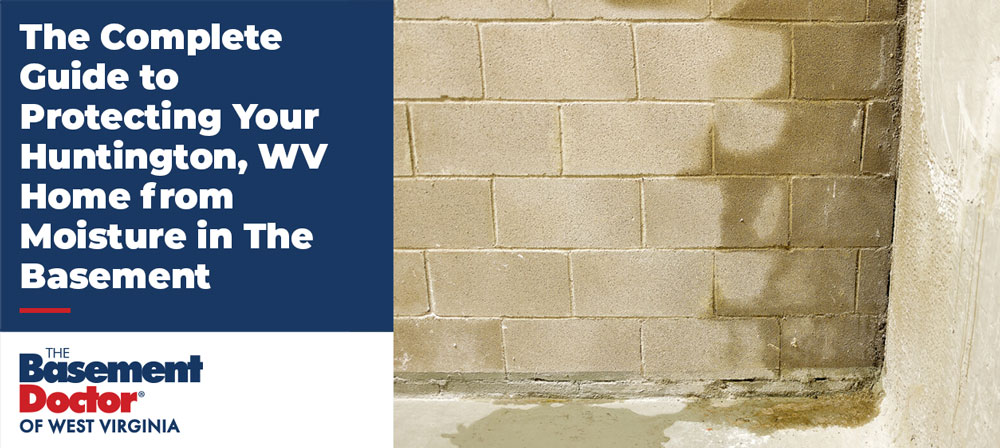
Battling a wet basement in your Huntington home? You’re not alone. Huntington homeowners face this challenge regularly, thanks to our region’s high humidity, heavy rainfall, and challenging soil conditions that create ongoing moisture problems.
That’s where Basement Doctor of West Virginia comes in. We specialize in wet basement repair throughout Huntington, WV, and we understand something important: fixing basement moisture means addressing the root causes, not just covering up the symptoms. We know that effective basement waterproofing in Huntington requires solutions designed specifically for our local conditions.
Your home deserves protection that lasts. This guide shows you how Huntington’s climate affects basement moisture, the most common problems we see in local homes, and the professional waterproofing solutions that keep your basement dry for years to come.
Understanding Huntington’s Climate and Its Impact on Basement Moisture
Huntington’s climate works against basement moisture control in several ways. Our region sees an average yearly relative humidity of 70%, with morning levels reaching 83% and afternoon readings at 55%. Those early morning humidity peaks of 82.9% create the perfect conditions for moisture to migrate toward the cooler spaces in your basement.
Heavy rainfall makes the humidity problem worse. Huntington receives 42.59 inches of precipitation annually under normal conditions, spread across 126 days per year. Extreme weather years have dumped over 62 inches, overwhelming drainage systems and forcing water toward foundations. The city’s ongoing flooding problems come from outdated infrastructure that can’t handle these water volumes.
The soil beneath your home creates its own set of challenges. Clay soils common throughout Huntington expand when wet and shrink when dry, creating ongoing pressure against basement walls. This soil movement affects foundations year-round. Our area’s varied landscape, with higher elevations and low-lying zones, causes water to collect in certain neighborhoods, building groundwater pressure directly against basement foundations.
Winter weather adds another layer of concern. Freeze-thaw cycles let melting snow seep into foundation cracks, then refreeze and expand, making those openings larger. When January’s warm indoor air meets cold basement surfaces, condensation forms and builds moisture levels over time.
We’ve seen how these factors work together to create persistent moisture problems in Huntington basements. Understanding these local conditions helps us design waterproofing solutions that actually work for our climate.
Common Basement Moisture Problems in Huntington Homes
Water finds its way into Huntington basements through several pathways, and understanding these entry points helps protect your home. Foundation cracks develop naturally from soil settlement and concrete shrinkage, with non-structural cracks often forming within the first month after foundation pouring. Vertical cracks typically signal dropping foundations when they’re wider at the top, while horizontal cracks indicate serious wall breakdown from external pressure. These openings create pathways for water seepage that damages your belongings and creates conditions for mold growth.
Groundwater pressure poses a constant threat to basement walls and floors. When soil becomes saturated around your foundation, tens of thousands of pounds of pressure build against your basement walls. Water weighs over 60 pounds per cubic foot, and this force pushes moisture through even solid concrete because of its naturally porous nature. The clay bowl effect makes this problem worse – backfilled soil around your foundation acts like a sponge, trapping moisture directly against basement walls.
White, chalky deposits on your basement walls signal trouble. This residue, called efflorescence, appears when water moves through concrete, leaving behind crystallized salt deposits. These deposits prove moisture is migrating through your foundation materials. Where moisture exists, mold spores multiply within 24 to 48 hours, taking hold on cardboard, drywall, wood, and insulation.
Sump pump failures leave your basement vulnerable when you need protection most. Overwhelmed pumps, burned-out motors, power outages, and clogged discharge lines prevent proper water removal, creating flooding risks during heavy rainfall periods.
Professional Basement Waterproofing Solutions in Huntington, WV
Huntington’s unique climate challenges require proven waterproofing solutions. With our region’s high humidity and expansive clay soils, effective basement moisture control means using integrated systems that address multiple water entry points.
The Basement Doctor of WV has kept West Virginia homes dry for over three decades. We’ve seen every type of basement moisture problem Huntington throws at us, and we know which solutions deliver lasting results.
Free Basement Waterproofing Estimate in Huntington, WV
Ready to protect your Huntington home? Your first step is a free basement waterproofing estimate from certified field inspectors. Companies like Basement Doctor of West Virginia conduct complimentary in-home inspections, providing personalized quotes tailored to each property’s specific needs.
We never provide phone quotes for basement waterproofing in Huntington, WV. Each seepage problem requires evaluation based on its own merits. Our inspectors perform thorough interior and exterior examinations, asking detailed questions to understand the full scope of moisture issues. These assessments typically last 45 minutes to an hour, though complex situations may extend to two hours.
Looking for financing options for your basement waterproofing project? Many wet basement repair companies offer financing plans or phased repair options to manage costs while ensuring effective solutions. We understand that protecting your investment shouldn’t strain your budget.