
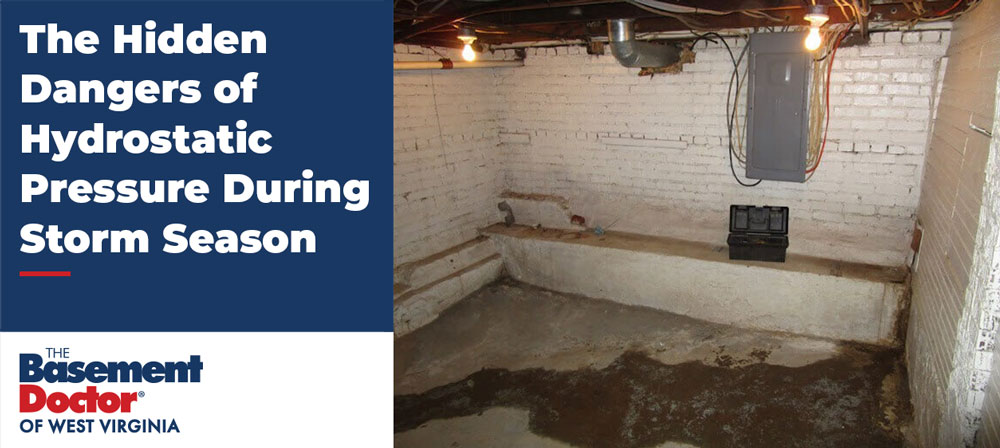
Throughout our West Virginia service areas, we’ve seen countless basement flooding situations where water-saturated soil creates devastating foundation damage. When storm season arrives, waterlogged earth generates tremendous force against your foundation walls—sometimes reaching pressures that exceed 100,000 pounds pushing relentlessly against your concrete structure.
This constant force from saturated soil creates foundation cracks, drives water penetration through what appears to be solid concrete, and can cause your basement walls to bow dangerously inward. Too many homeowners miss the early warning signs until they’re dealing with serious structural damage.
At Basement Doctor West Virginia, we’ve learned that foundation and water damage repairs consistently rank among the costliest home improvements. Delaying action on these issues only increases your repair expenses.
The Science Behind Water Pressure and Foundation Damage
Water pressure describes the force created when groundwater pushes against your foundation walls. Because water weighs approximately 60 pounds per cubic foot, thousands of gallons create unrelenting force against your basement structure.
West Virginia’s unique soil composition presents distinct foundation challenges. Our region’s clay-heavy soils retain moisture considerably longer than sandy soil types. When clay absorbs water, it expands dramatically—then contracts during dry periods. This constant expansion-contraction cycle stresses your foundation beyond typical water pressure concerns.
Inadequate drainage systems cause more foundation damage than nearly any other factor. When water can’t drain properly away from your home, it saturates the surrounding soil. This waterlogged earth loses its structural stability and dramatically increases pressure against your concrete walls.
Several drainage problems compound these pressure issues: clogged gutters directing water toward your foundation, improper yard grading that slopes toward your home, and high water tables keeping soil saturated year-round.
Homes built before contemporary construction standards face increased vulnerabilities. Properties constructed before the 1980s often lack the modern drainage infrastructure and waterproof barriers that are standard in today’s construction.
Aging concrete presents additional weaknesses. Underground moisture forces water vapor through these compromised areas, allowing your walls to absorb dampness continuously.
Elevated pressure drives water seepage through what looks like solid concrete. Water discovers microscopic pathways invisible to homeowners. Precipitation, humidity, and groundwater infiltrate through tiny openings in foundation materials.
This gradual seepage often remains undetected initially. However, saturated soil surrounding your foundation intensifies basement moisture problems. Water migrating through porous concrete creates ideal conditions for mold development and structural deterioration.
Common Water Entry Points in Your Basement
Water enters your basement without dramatic flooding events. Pressure creates hidden entry points most homeowners never recognize until they’re facing serious damage.
Where Water Finds Its Way Inside
Your basement contains specific vulnerable areas that water targets first. The most critical vulnerability? The cove joint where your floor meets your walls—a seam that creates an inherent structural weakness.
The clay bowl effect intensifies these water intrusion challenges significantly. During foundation construction, contractors excavate soil for installation and then backfill around your completed basement structure. This disturbed backfilled earth behaves completely differently than the original undisturbed ground. Storm water soaks through this loosened backfilled soil and accumulates around your foundation like water collecting in a bowl. This concentration creates intense pressure against your basement walls, driving moisture through every vulnerable point it discovers.
Water Intrusion Without Obvious Structural Damage
Moisture finds its way inside even when your foundation shows no visible cracks or damage. During West Virginia’s rainy seasons, rising groundwater levels create pressure that forces dampness directly through concrete materials or pushes it upward through your basement floor. Those microscopic openings we discussed? They transform into active water channels, allowing passage through what looks like perfectly solid concrete.
Small foundation cracks that appear insignificant during dry weather can expand dramatically when pressure builds.
Water-saturated soil surrounding your basement increases substantially in both weight and volume, generating inward force against your walls. Deeper foundations combined with wetter conditions produce greater pressure accumulation. This force creates shifting, bowing, cracking, or bulging that undermines your foundation’s structural soundness.
Clay-rich soils present particular problems because they swell considerably when wet and shrink during dry conditions. This relentless expansion-contraction pattern stresses your foundation structure, widening existing cracks and creating new weak points where pressure can exploit vulnerabilities.
A bowing wall left unrepaired will eventually crack or collapse entirely. Walls showing bowing beyond 2 inches need wall anchor systems or helical tieback installation to prevent total structural collapse from water pressure.
The Cost of Postponing Foundation Repairs
Acting quickly makes enormous differences in your repair costs. A minor crack addressed immediately might cost $200 to $800 for proper repair before pressure makes the damage worse.
Persistent Dampness on Walls or Floor Surfaces
Noticing basement walls that feel cool and damp when you touch them? That moisture comes from pressure forcing dampness through your foundation from exterior soil. Concrete naturally absorbs and releases moisture constantly, making walls feel somewhat wet during high humidity periods and elevated pressure conditions.
You might notice walls feeling cool, air feeling heavy, or dampness without standing water. Water weeping from walls, puddles on floors, and humid conditions all indicate pressure transferring moisture from outside.
Peeling Paint, White Deposits, and Mineral Staining
Seeing white, powdery deposits on your basement wall surfaces? That’s efflorescence—mineral salts pulled to surfaces when pressure pushes water through masonry. Paint failure happens soon after, with coatings bubbling and peeling within months.
Efflorescence creates no direct health risks, but it reveals pressure complications that generate significant foundation deterioration. As moisture reaches wall surfaces and evaporates away, mineral deposits accumulate while water absorption continues beneath. This builds concentrated salt levels producing 2,000–3,000 psi force—exceeding concrete’s structural strength.
Unpleasant Odors and Fungal Growth
Basement smells reveal moisture issues stemming from water pressure. High humidity creates perfect conditions for fungal development on wooden framing, wallboard, stored boxes, and flooring materials—worsening allergies and breathing problems.
Earthy odors signal fungi thriving in damp environments produced by water pressure. Poor air circulation traps dampness, creating spaces where microorganisms and fungi flourish, releasing compounds producing musty smells.
Standing Water Along Foundation Bases or Drainage Points
Standing water along foundation bases or drainage points shows water pressure exceeding your basement’s defensive capacity. Clogged gutters, improper yard slopes, obstructed discharge pipes, pump malfunctions, and elevated water tables all create pooling water complications caused by water pressure.
How Expert Basement Waterproofing Solves Water Pressure Issues Permanently
Expert basement waterproofing addresses water pressure at its origin—stopping foundation damage before it begins. We install reliable systems that channel water away from your property, eliminating flooding and structural harm permanently.
Interior Drainage Solutions That Deliver Results
Interior drainage installations along your basement edges capture water before pressure drives it through your foundation. We place perforated collection pipes in channels beside foundation walls, directing groundwater straight to collection basins before pressure can create damage.
This approach costs significantly less than exterior excavation, takes less time to install, and protects your current landscaping. Interior systems avoid blockages from dirt and root intrusion that frequently affect exterior approaches.
Pump Systems and Effective Water Discharge
Collection pumps automatically discharge accumulated water that pressure drives into your basement. Correct discharge routing moves water 10-20 feet beyond your foundation edges. We install discharge pipes beneath frost depth (roughly 40 inches in West Virginia) to avoid winter freezing complications. Battery backup units guarantee continuous operation during electrical outages when pressure stays active.
Foundation walls showing cracks or bowing beside damp spots demand immediate expert assessment. Recurring basement flooding indicates serious foundation complications from water pressure needing professional waterproofing approaches.
Continuously damp basement floors require professional examination to determine moisture origins and pressure intensity. That lingering earthy smell indicates fungal presence—a waterproofing expert eliminates the root pressure cause.
Tackling these pressure issues early produces simpler, more economical repairs.
Why Expert Waterproofing Provides the Most Dependable Solutions
Expert waterproofing contractors bring the expertise and advanced equipment to properly diagnose and fix water pressure complications. We locate the real source and correct it permanently.
Guaranteed Protection.
Expert installations feature guarantees spanning 10+ years, with select contractors providing lifetime protection. Seek transferable guarantees protecting materials and workmanship together.
Don’t delay until severe weather arrives. Reach Basement Doctor West Virginia now for complimentary property evaluation.
Arrange your consultation with our licensed technicians. We’ll identify your ideal waterproofing approach.