
Worried about your foundation moving upward instead of down? Foundation heaving is a serious concern for Huntington homeowners, and you’re right to be concerned about it.
Your foundation heaves when soil beneath your home expands and pushes everything upward. This happens when moisture gets into the ground or when freezing temperatures hit. Water grows by nearly 10% when it freezes, and wet soil can expand even more when frozen. Here in Huntington, our clay and silt soam soils swell up when they get saturated, putting real pressure on your foundation.
Understanding how our local soil and West Virginia’s freezing winters cause foundation heaving protects your home and your investment. We’ll explain what causes these problems, show you the warning signs to watch for, and outline the proven repair solutions available through Basement Doctor of West Virginia for foundation repair in Huntington, WV.
What Foundation Heaving Means and Why It Happens in Huntington
What causes your foundation to push upward?
Foundation heaving happens when soil beneath your home expands and lifts your foundation upward. Your soil gains moisture or freezes, creating enough force to lift concrete slabs or footings right off the ground.
This affects your entire structure, but more often it pushes parts of your foundation upward while other sections stay put. Concrete slabs face higher risk because they weigh less than full foundations – there’s simply not enough weight to resist the lifting forces.
The real problem starts with soil expansion beneath your home. Clay soils act like a sponge, swelling when they absorb water and shrinking during dry periods. When soil expands, it pushes wherever there’s least resistance. With dirt packed around all sides and below, the only way left is up – lifting your foundation along with it.
Settlement vs. heaving – knowing the difference matters
Settlement pulls your foundation downward into the soil. Heaving pushes it upward. Many homeowners and even some contractors confuse the two because the symptoms look nearly identical – cracked walls, sticking doors, and uneven floors appear with both problems.
Here’s how to tell them apart: Heaving results from upward pressure when soil expands, while settlement comes from gravity and soil shrinkage. Floor slabs affected by heaving often show cracks that meet at a point or form loops where the heave is strongest. Exterior walls may appear to sink when your basement slab is actually pushing up near the center of the house.
Why Huntington homes face unique challenges
Huntington sits in an area packed with clay content that’s highly sensitive to moisture changes. Heavy rain or snowmelt makes the soil expand. Dry periods make it contract. These constant expansion and contraction cycles put continuous pressure on foundations, causing cracks and shifts.
Our area’s high humidity and fluctuating temperatures make foundation problems a real threat to home stability. Huntington’s rolling hills and periodic heavy rains cause water to pool around foundations, making the underlying soil expand or contract. Poor drainage in some neighborhoods makes the problem worse, allowing water to accumulate near foundations and increasing movement risk.
Local Soil Conditions That Cause Foundation Problems in Huntington
Clay Soil Problems in the Huntington Area
Clay soil acts like a sponge – it soaks up water and swells significantly. When dry periods hit, the same clay shrinks and cracks. Clay particles carry a negative charge that pulls in hydrogen atoms from water molecules. Water molecules stick to other water molecules, creating more space between clay particles as water builds up. This expansive clay can push with forces up to 5,500 pounds per square foot – more than enough to lift your entire home.
Silt Loam Soil and Why It Holds Water
Huntington sits on silt loam and silty clay loam formations. Silt holds onto water much longer than other soils because of its smaller particles. When saturated, silty soil turns into mud and expands, putting stress on your foundation. These silt loam soils can hold 1.50 to 2.30 inches of water per foot of soil – that’s serious moisture retention. Unlike sandy soils that let water drain through, silt soaks up moisture and holds it, creating those expansion cycles that damage foundations.
West Virginia Winters and Frost Heave
Frost heave happens when moisture in soil freezes and pushes upward. Water grows by about 9% when it freezes. Ice forms beneath the surface as water gets pulled from unfrozen soil into the freezing zone. Silty and loamy soils face the biggest frost problems because their pore sizes allow water to move easily. Frost heave can push with pressures up to 19 tons per square foot, creating horizontal and diagonal cracks in foundation walls.
Seasonal Changes That Damage Foundations
During dry spells, clay dries out and shrinks, leaving gaps around your foundation. When rain or snowmelt comes, clay absorbs water fast and swells back up. Expansive soils can grow by 10% or more when wet. The American Society of Civil Engineers reports that roughly one in four U.S. homes has damage from expansive soils.
Water Table Changes in West Virginia
When groundwater levels rise during heavy rains, saturated soil swells and pushes against your foundation. Rising water tables reduce pressure in soil, which can cause heaving. When water tables drop, soil may settle instead, creating uneven support beneath your foundation.
Spotting Foundation Heaving Problems in Your Huntington Home
Catching foundation heaving early protects your home from serious structural damage. These warning signs develop slowly but steadily due to our local clay soils and harsh winters.
Wall and Foundation Cracks
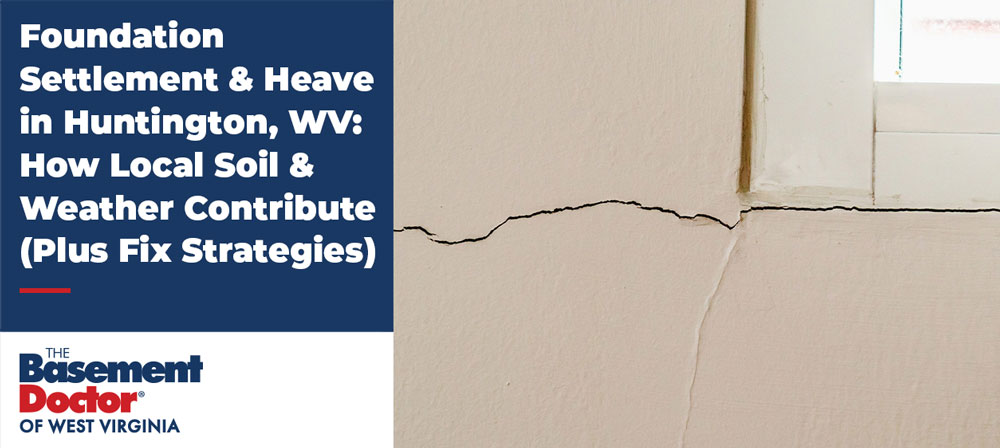
Notice cracks in your drywall that seem thicker than normal hairline fractures? These grow longer over time and often appear around doorframes at the top and window frames at both top and bottom. Brick walls show stair-step cracks that zigzag through the mortar joints.
Floor cracks tell a different story. The immense pressure from expanding soil – up to 5,500 pounds per square foot – pushes against your basement slab. Watch for a pattern we call the triangle of death, where three separate cracks meet at the highest point of the heave, forming a triangular shape.
Floors That Rise and Buckle
Dealing with concrete floors that jut upward like small ramps? These create tripping hazards and signal serious heaving problems. The damage often hides under carpet or area rugs but shows clearly with tile, hardwood, or linoleum. You’ll notice parts of your floor sitting higher than others, especially in basements and ground floors.
Doors and Windows That Won’t Work Right
Battling doors that stick or windows that won’t open smoothly? Foundation heaving transfers upward pressure through your home’s framework, pushing frames out of square. This makes doors and windows bind and stick because the foundation movement warps their frames.
Separating Walls and Ceilings
Concerned about gaps appearing where your walls meet the ceiling? These separations signal uneven foundation movement and structural stress as different parts of your home shift at different rates.
Outdoor Concrete Problems
Your sidewalks, patios, and garage slabs can heave in sections, creating concrete slabs that stick up and pose serious tripping hazards around your property. These elevated areas are often the first visible signs of soil movement affecting your home.
How We Fix Heaving Foundation Problems
Fixing heaving foundation repair requires professional expertise and proven solutions that address both the damage you can see and the underlying causes you can’t.
Professional foundation inspection and diagnosis
Our foundation inspections take 1 to 2 hours and include detailed walkthroughs checking for cracks, uneven floors, and sticking doors. We use laser levels to measure elevation changes throughout your home, detecting movement invisible to the naked eye. Our soil and drainage assessments examine landscape slope, tree root locations, gutter conditions, and standing water presence. You’ll receive a detailed written report explaining concerns, suggested repairs, and cost estimates.
Drainage improvements and water management
French drains remain the most effective method for removing excess groundwater. These subsurface systems use perforated pipes in gravel-filled trenches, typically 2 to 3 feet deep along foundation perimeters. We extend downspouts at least 4 to 6 feet away from foundations. Proper grading creates a 6-inch drop over the first 10 feet from your foundation.
Soil stabilization techniques
Chemical stabilization modifies soil properties by reducing plasticity, shrinkage, and swelling. Common additives include lime, cement, and fly ash. Mechanical methods involve compaction and tamping to increase particle interlocking.
Underpinning and pier systems
Helical piers screw deep into stable soil or bedrock, transferring foundation weight away from unstable ground. Push piers are hydraulically driven using the structure’s weight until reaching competent soil. Both systems stabilize foundations and can lift them back to level positions.
Root and vegetation control
Root barriers direct tree roots downward rather than sideways toward foundations. Strategic pruning and maintaining consistent soil moisture through foundation watering systems prevent moisture fluctuations. Plant small shrubs to absorb excess moisture while avoiding large trees near foundations.
Get Your Free Foundation Inspection from Basement Doctor of West Virginia
Heaving foundation problems in Huntington require professional expertise. These complex issues – from our expansive clay soils to West Virginia’s freezing winters – need expert analysis. We understand how local soil behaves throughout the seasons and can tell you whether you’re dealing with heaving, settlement, or both.
Basement Doctor of West Virginia specializes in foundation repair in Huntington, WV. For years, we’ve been fixing heaving foundation issues specific to our region. We examine your foundation, drainage patterns, soil conditions, and structural stability. Our team identifies what’s actually causing your foundation problems rather than just patching visible damage.
We provide free, no-obligation foundation inspections for Huntington homeowners. During your inspection, we’ll explain what’s happening beneath your home and why it’s happening. Whether you need better drainage, soil stabilization, pier systems, or multiple solutions, we’ll recommend the most effective approach for your specific situation.
Your home is one of your biggest investments. Early action prevents minor heaving issues from becoming major structural problems that affect your home’s safety and value.
Contact Basement Doctor of West Virginia today to schedule your free foundation inspection. We’ve got this covered.